Rice Husk Can Be Used To Make Mechanism Charcoal With Charcoal Briquette Machine

As we all know, the raw materials for machine-made charcoal for barbecue are sawdust, branches, hardwood, bamboo chips, and so on. Of course, many people also hope to use wheat straw or corn stalks to make mechanism charcoal. Zhengzhou Fusmar charcoal briquette machine manufacturer clearly tells you that there is no problem with straw in principle, but due to its low carbon content, large ash content, low-quality carbon, and poor market acceptance, it can be used for other purposes. What about rice husks? We all know that many rice husks have no place to place after harvesting. If it is used as mechanism charcoal, is it feasible?

charcoal making machine

This is a good idea. In many years of practice, we know that it is completely feasible to use rice husk as charcoal. Because the shape and size of rice husks are suitable for forming, the crushing process can also be omitted. In other words, as long as the process of drying, molding, carbonization can become finished charcoal.

raw materials for mechanism charcoal

In addition, rice husks can also be carbonized, and then formed using continuous charcoal making machine for rice husks. The carbonized carbon powder can be formed into different shapes, such as carbon blocks, carbon rods, balls, and tablets.

charcoal briquette machine

Since carbonization is the key process of rice husk mechanism charcoal, rice husks can also be carbonized with rice husk retorting. Rice husk carbonization is different from the traditional charcoal firing method, which uses mechanical processing as the main method, so rice husk charcoal also called mechanism rice husk charcoal. Since the carbonization of rice husks expands the source of raw materials for the production of machine-made charcoal, some people call charcoal made from rice husks and wood by mechanical distillation as biomass charcoal, biochar for short.

carbonization furnace

Let’s talk about this key part of the carbonization furnace. Rice husk carbonization furnace adopts automatic control. The whole set of equipment is simple and labor-saving. In addition to the direct carbonization of rice husks, other biomass materials not exceeding 5 cm can also be directly carbonized. The principle is the same as the continuous carbonization device. Biomass materials that can also be carbonized include sawdust, peel, coffee shell, palm shell, pecan shell, bamboo flakes, hemp, coconut shell, bark, and so on. The carbonization process belongs to retorting carbonization, also called fluidized bed carbonization.  

charcoal briquette production line

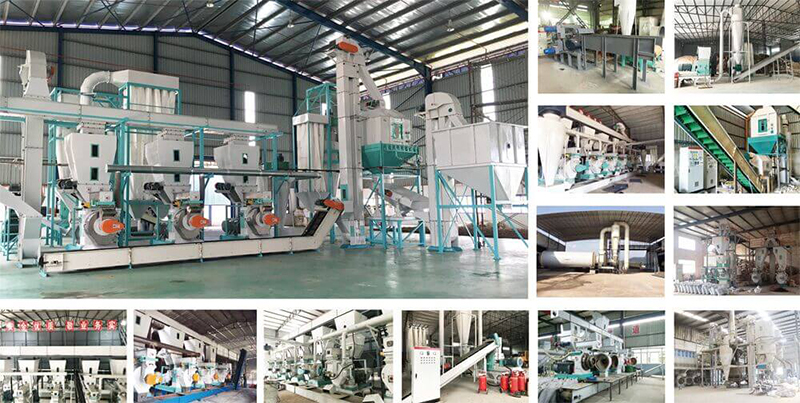
The complete set of rice husks charcoal briquette production line consists of dryer machine, charcoal briquette machine, carbonization furnace, etc. The equipment has scientific structure, reasonable design, continuous carbonization production, high efficiency, and the flue gas generated by carbonization can be recycled, reducing pollution, and providing new equipment for the comprehensive utilization of rice husks.

Things You Need To Know About Feed Processing Machinery In Receiving Raw Materials

In the design of compound feed processing machinery, the processing technology and production equipment are important to ensure the quality of feed. Only in the performance of reliable feed processing machinery and scientific process can produce qualified compound feed.

Zhengzhou Fusmar Machinery is a professional feed pellet machine manufacturer, welcome to visit our website.

Reasonable Selection Of Feed Processing Machinery

Reasonable selection of feed processing machinery, but also with scientific processing technology. Only then the product quality can be guaranteed. Of course, for the production enterprises, the use of perfect, reasonable, flexible process, choosing efficient and high-quality equipment, also always belongs to the goal which diligently pursues.

The analysis based on the source of the feed and the processing method. Generally, the processing technology is first crushed and then batched. The production system of feed processing machinery also composed of eight parts: raw material receiving, pellet crushing, ingredient mixing, pelletizing and expansion, liquid spraying, finished product discharge, electrical control, and dust removal system.

Pellet Crushing Process Of Feed Processing Machinery

In the process of feed processing machinery, crushing process is a very critical process. According to the current production, according to the different crushing times of raw materials, it can divide into primary crushing process and secondary crushing process. The one-time pulverization process is simple and the equipment investment is small, but its disadvantages are that the treatment results of the pulverized material may have uneven particle size and high power consumption.

Another crushing process can make up for this shortcoming. With this method, the finished products processed through feed processing machinery have the same granularity, high output, and low energy consumption, but the equipment investment is large. Therefore, most feed mills use one-time crush currently. In compound feed, pellets generally account for 60% -70%. When selecting a crusher machine, the production capacity of the feed mill grinder is generally greater than the production needs of the feed mill.

The Receiving Of Raw Materials

Next, we mainly analyze the content of receiving raw materials. Generally speaking, the raw material receiving process generally includes conveying equipment, magnetic separation equipment, primary cleaning screen, metering equipment and production silos. At present, the commonly used raw material weighing equipment is a floor scale, and a flow scale rarely used.

In this process, most of the production enterprises use the conveying equipment is generally bucket elevator and scraper conveyor. Its productivity and receiving method are mainly related to feed processing machinery and the production capacity of manufacturers, generally based on the principle of not affecting the feeding.

Hope this article can help you know more feed pellet production equipment, if you want to build your own feed pellet plant, please contact us.

Biomass Pellets Also Called Wood Pellets

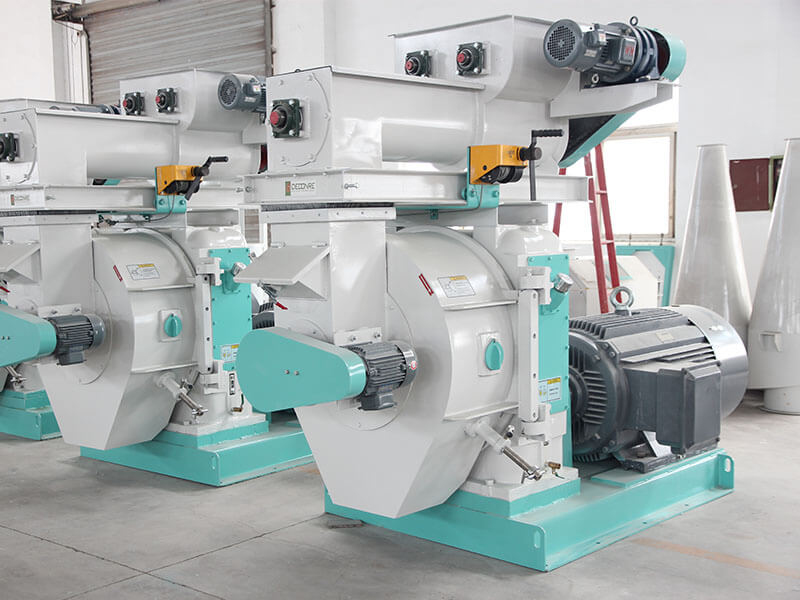
Biomass pellets also called wood pellets, they are a new style of fuel. Biomass pellets are becoming more and more popular in the world, many customers consulting us to build biomass production lines with our biomass pellet machine.

biomass pellet machine

Since the raw material of the biomass pellets is wood logs, wood branches, wood sawdust. It’s necessary to process the raw material before granulating the material into pellets. Usually, the size of the raw material should be less than 2/3 of the die hole.

raw materials for wood pellet machine

The Requirements Of Biomass Pellet Machine pelletization

There are three kinds of requirements in pelletizing, the first is the raw material, the second is the particle size, and the third is the humidity. As long as these three requirements are met in the pelletizing process, a good biomass pellet fuel can be made. The wood pellet machine is most suitable for coarse fiber pelletization. The common processing materials are: wood chips, straw.

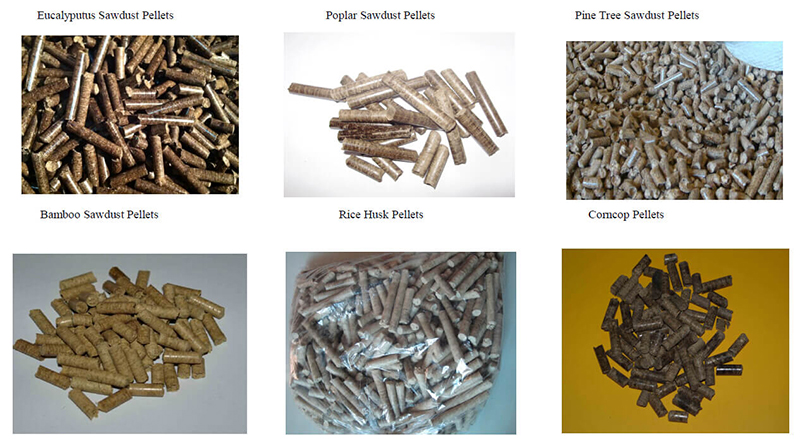
biomass pellets fuel

The raw material is very broadly, such as agricultural forestry waste, be like straw, biomass pellet cotton stalk, sawdust, branch, straw, fruit shell, waste wood. The size of the raw material affects the pelletization, the pelletization size needs to use the crusher machine to crush the raw material into a particle size of about 5MM to 10MM. Only in line with the standard can be made. Pelletization also requires humidity. The humidity is 8% to 12%. A dryer machine can be used. Only when the standard humidity is reached, the biomass pellet fuel can be made.

biomass pellet fuel

Development Prospect Of Biomass Pellet Machine

First of all, because of the shape of the pellets, compressed volume, save storage space, but also easy to transport, reducing transport costs. Secondly, the combustion efficiency is high, easy to burn out, less carbon residue. Compared with coal, the volatile content of high ignition point low, easy to ignite. With the increase of density, high energy density and large increase of combustion duration, it can be directly applied to coal-fired boilers. In addition, when biomass pellet combustion, the harmful gas composition content is very low, the emission of harmful gas is less, with environmental protection benefits. And the ash after combustion still can be used as potash fertilizer directly, saved expense.

Biomass pellet fuel is renewable new energy. It uses wood waste, trees, corn stalks, rice stalks, rice husks, and other plant wastes to make pellet fuel through crushing, mixing, extrusion, drying and other processes for direct fuel combustion. Biomass pellet fuel can replace non-renewable energy such as coal, oil, natural gas. The promotion and use of the wood pellet production line not only solves the problem of straw handling, but also increases farmers’ income, and also contributes to environmental protection.

wood pellet production line

In brief, the quality and level of production of the product granules are closely related to the quality of the operator of the biomass pellet machine. The operator of the biomass pellet machine must change the water content of the powder according to changes in ambient temperature and humidity.

Production of qualified pellets due to changes in particle size, formulation adjustments and equipment wear and customer specific requirements. To produce high-quality products, employees must have more comprehensive knowledge, rich experience, a strong sense of responsibility, and overcome various difficulties in order to produce high-quality products.

Hope this article can help you to know more about raw material size with the biomass pellet machine. If you want to build the biomass pellet production line, please contact us.

How To Design A Perfect Feed Formula For Broilers

Broiler feed and chicken feed shall contain energy feed, protein feed, and mineral feed, vitamins, and additives. Zhengzhou Fusmar Machinery is a professional pellet making machine manufacturer. This article will tell us how to design a perfect formula, and how to allocate the proportion of each ingredient according to nutritional requirements.

According to the characteristics of the feed, the common feed for broilers can divide into energy feed, protein feed, vitamin feed, mineral feed, and special additives feed. Feed pellet machine is dispensable equipment to make animal feed pellets.

Energy Feed

1. corn: It is one of the most important energy feeds for broilers. Rich in starch and crude fat. When formulating the diet, the amount of corn generally accounts for 40% to 70% of the diet.

2. broken rice: It is the broken grain rice screened in rice processing. The starch content is high, the crude fiber content is low, and it is easy to digest. Its nutritional value is similar to that of corn, and the dosage is about 30% to 50% of the diet.

3. wheat: High nutritional value, energy content close to corn, more protein content, amino acid than other cereals, vitamin B is also very rich, palatability is good, the amount of easier to stick chicken mouth and affect feeding. It can generally account for 10% to 25% of the diet.

4. barley: It contains 15% to 20% of the skin, the energy is about 75% of the corn, the crude fiber content is 3 times higher than the corn can account for 10% to 15% of the diet.

5. rice bran: It is a by-product of rice processing, mainly composed of skin and rice embryo. Its crude fat, crude protein, and crude fiber content are higher than rice, rich in vitamin B, often used as auxiliary materials, the amount should not be too much, generally accounting for 8% to 10% of the diet.

6. wheat bran: It is a by-product of wheat processing. It contains crude protein, vitamin B, and manganese, etc., has a laxative effect, the dosage should not be too large, the general broiler dosage does not exceed 8%.

Protein Feed

Protein feed can divide into plant protein feed and animal protein feed. Plant protein feeds such as bean cake, peanut cake, cottonseed cake, rapeseed cake, and so on. Animal protein feed such as fish meal, blood meal, meat and bone meal, feather meal, silkworm cocoon, and other processing by-products.

1. bean cake: A by-product of soybean oil processing from soybean oil. Bean cake contains more than 40% protein, ranking first in plant protein feed, and is rich in lysine, with high nutritional value, generally accounting for 15% to 20% of the diet.

2. cottonseed cake: its protein content is second only to the bean cake, up to 30% to 35%, but it should not be used simply as a dietary plant protein feed, because of the lack of lysine. The amount can not exceed 10% of the diet, because the cottonseed cake contains gossypol, too much feeding can cause poisoning.

3. rapeseed cake: 25% to 30% crude protein, low lysine content, higher methionine content than bean cake, but the rapeseed cake contains mustard enzyme. Which can promote the decomposition of sinapinic acid into toxic substances, so the amount of feed should not be too much, generally less than 5%.

4. Fish meal: It has high nutritional value and comprehensive amino acid content. The crude protein content of high-quality fishmeal is higher than 60%, the salt content is less than 2%, and the water content is below 12%. Fish meal can generally be used in an amount of 5% to 12% of the diet.

5. Blood powder: It is a brown powder feed made by cooking, pressing and drying the blood of animals. The crude protein content is as high as 70%-80%, rich in lysine, but lacks methionine, cystine and isoleucine, and has low solubility. It is not easy to digest, and has poor palatability. It should be mixed with other protein feeds. Not more than 3% of the diet is appropriate.

Green Feed

Due to the high moisture content of fresh green and green feed, the dosage should not be too large, so as to avoid causing squatting and affecting fattening of broilers. Green leaves, grass leaves, etc. are dried and pulverized to become high-quality grass powder or leaf powder, such as alfalfa powder, eucalyptus leaf powder, etc. are good vitamin supplement feeds, generally accounting for 2% to 5% of the diet.

Mineral Feed

When the mineral content in natural feed is insufficient, or when some elements are unbalanced, attention should be paid to replenishing the mineral feed in the diet, especially for high-yield broiler breeders and broilers with fast-growing growth. Should pay attention to supplement. The commonly used mineral feeds are mainly the following:

1. stone powder: Calcium content is 35% to 38%. The dosage generally accounts for 1% to 3% of the diet, and the broiler breeder can reach 5%.

2. shell powder: Containing about 38% of calcium, often used as feed for calcium supplementation. It usually accounts for 1% to 3% of the diet, and up to 5% of the broiler breeders during the laying period.

3. salt: In the preparation of the diet according to the actual salt content in the feed, and then consider the amount of salt added to avoid excessive or insufficient salt. The general dosage does not exceed 0.38% of the diet.

Additive Feed

In order to promote the normal growth of broilers, prevent the disease, increase the yield and economic benefits. In modern broiler breeding, the use of additives such as amino acids, vitamins, trace elements, antibiotics, antioxidants, antifungal agents. The types and dosages to add should determine according to actual needs. For example, in most feed diets, vitamins and trace elements are incomplete. It should note that appropriate proportions of multivitamins and trace element additives should add, generally accounting for 0.05% to 0% of the diet. It is often rainy and humid in summer, often with anti-fungal agents and antioxidants. Add the additive to the feed and mix well and mix well. Before the broiler is marketed, the feed should not contain any drugs.

Zhengzhou Fusmar Machinery provides complete feed pellet prodcution line for chicken feed, and also we will provide perfect feed formula to customer for reference.

How to Process Chicken Manure into Fish Feed Pellets

Our company Fusmar manufactured fish feed pellet machine, welcome to visit our website and inquiry machine details. This article will introduce how to process chicken manure into fish feed pellets.

Why Make Fish Feed Pellets From Chicken Manure

The chicken manure contains sprinking chicken feed, dander, feather, a slight of broken eggs and undigested feed as well as unabsorbed nutrients. According to the research, crude protein accounts for 30~33% in the dry chicken manure, more than half of which is uric acid, so the chicken manure is the good feed for fish and the ideal material for making fish feed pellets.

Using chicken manure to make fish feed pellets can reduce the feeding cost and form a good ecological cycle between chicken and fish farming. While, the raw chicken manure is not suitable for feeding fish directly because of containing parasitic ovum, some toxic substance, and germs. Only after the treatment of professional leavening agent can the manure be non-toxic and nutrient-rich fish feed.

Fish Feed Making Process

1. Mix the chicken manure (accounts for about 50%) with proportional corn flour, bean cake, rape seed cake, and wheat bran.

2. Add a certain amount of leavening agent to the mixture (the leavening agent can be diluted with water in advance to be mixed easily and evenly with materials.)

3. Adjust the moisture content to be about 60 % ( a simple judging method: grasp the material firmly, and then it can clump; let it go and it can break up.) 

4. Put the material into a plastic bag or pond which can be sealed. You can get better result to pour human and animal excreta on the fungus chaff.

5. Cover the mixture with plastic film to make it ferment for 3-7days (a little longer in winter)

6. When the chicken manure become yellow green and send out not stink but tartness like wine (the longer the fermentation, the stronger the winey smell), the fermentation is finished.

7. Put the fermented chicken manure into the fish feed extruder, then you can get nutrient-rich and uniform fish feed pellets.

The feed cost for every kilogram fish is only 0.15-0.20 yuan with this fish feed pellets, while it is 0.30-0.40 yuan with common feed pellets at present. So, feeding fish on this chicken manure feed pellet can reduce the feed cost by more than 50%.  

Hope this article can help you know more about the fish feed pellet machine, if you want to build your own fish feed production line, please contact us.

Eucalyptus Bark Can Be Used As Raw Material For Charcoal Briquette Machine Equipment

At present, mechanism charcoal is one of the main fuels in the barbecue industry. It has the advantages of no smoke, no odor, no cracking and no sparks when burning, high calorific value, long burning time, and so on. With the increasing awareness of environmental protection in human society and the start of green projects, the production methods of logging and burning charcoal have gradually ended over the years. The machine-made charcoal produced by charcoal briquette machine is an environmentally friendly fuel, using wood chips, sawdust, bagasse, peanut shells, corn cobs, straw and other wastes as raw materials. Not only does it turn waste into treasure, but as an alternative fuel, it has better quality than traditional charcoal and has good development prospects. 

Production Advantages Of Charcoal Machine Equipment

1. The automatic adjustment function of the pressure roller: The principle of the two-way rotation of the thrust bearing is used to automatically adjust the pressure angle. So that the material not squeezed, the machine not stuffy, and the stability of the discharge molding is ensured.

2. Electric heating function: Fully automatic electric heating device, which can adjust the dry humidity of the material and solve the problem of blockage and non-forming.

3. The operation is simple and easy to use: High degree of automation, either manual feeding or conveyor feeding. Pay attention to factors such as the humidity of the raw materials, whether the equipment is firm during installation, and the hardness of the products produced.

4. Strong raw material applicability: It’s suitable for the molding of various biomass raw materials, the straw length is from powder to 50mm, and the moisture content is 5-30%, which can be processed and formed.

5. High production capacity, low price, and low power consumption.

Eucalyptus Bark Can Be Used As Raw Material For Charcoal Briquette Machine Equipment

Charcoal briquette machine production mechanism charcoal has rich raw materials and low prices. For example: waste straw, wood chips, branches, and leaves, so the eucalyptus bark is possible to make mechanism charcoal. But it can not be directly produced, that is to say, only bark is not feasible. Because the process of forming charcoal requires wood fiber, the bark does not have wood fiber, although the content of carbon in the bark reaches the standard, there is no wood fiber. So the mechanism sticks pointed out will be very loose, and it is extremely difficult to form after carbonization. This is not the case when building a factory where there is a lot of bark as raw material. The lack of wood fiber is completely compensated. Only need to add an appropriate amount of wood chips can be successfully formed. There are many raw materials for charcoal making machine, and some may not be able to produce charcoal directly, need to add some other things to assist.

From the overall situation, eucalyptus bark can be used for making mechanism charcoal, so users of investment mechanism charcoal machine equipment can carry out this project!

Talk About Feed Pellet Machine Feed Processing Equipment

With the progress and development of the breeding industry, there are more and more farmers. However, no matter for small and medium-sized farms or large farms, feed pellet is the most important part of the farms. While many farmers purchase full-price feed, they also wonder whether their farms can save costs to make feed themselves, so feed processing equipment has gradually become popular. Large-scale pig farms choose to use Industry Animal Feed Pellet Plant or powder machinery equipment, while small and medium-sized farms will also choose to use 500 KG Animal Feed Pellet Plant or a single feed pellet machine. Among the many feed machines, the feed pellet machine has a higher utilization rate.

Generally speaking, the feed pellet machine divided into two categories, one is ring die feed pellet machine, the other is flat die feed pellet machine. Below introduce these ring die feed pellet machine and flat die feed pellet machine.

Ring die feed pellet machine generally used for large-scale farms. Because of its large output and high internal maturity, it can press various feed materials that are difficult to form into pellets. For example, peanut shells, wood scraps, forage, bamboo scraps, sawdust, etc., after being crushed by the feed crusher machine, the crushed material pushed into the conditioner through the forced feeder of the ring die feed pellet machine. And then fully integrated heating with steam, the pellet feed achieves a high degree of maturation. Generally, the output of the smaller ring die feed pellet machine is 0.8-1.5 tons per hour. Commonly used larger ring die feed pellet machine makes feed pellets between 10 tons and 20 tons per hour. The suitable feed pellet machine type can be selected according to the needs of farmers.

Flat die feed pellet machine is cheaper than ring die feed pellet machine. It is favored by many family farms because of its small footprint, easy to use, feed pellet has high hardness, smooth surface, internal maturation, comprehensive nutrition, and easy storage and transportation. The output of the flat die feed pellet machine also varies from 60kg to 600kg per hour.

From the perspective of the majority of farmers, the animal feed mill not only helps the farmers save the cost of breeding but also increases the economic profit.

Biomass Pellet Machine Wood Pellet Machine Is Environmental Protection Equipment

Biomass pellets are also called wood pellets, they are a new style of fuel. Biomass pellets are becoming more and more popular in the world, many customers consulting us to build biomass production lines with our biomass pellet machine.

The Types Of Biomass Pellet Machine

Our biomass pellet machine has two types, one is flat die pellet machine, one is ring die pellet machine. Flat die pellet machine is suitable for pressing strong adhesive materials, such as crop straw. And ring die pellet machine, suitable for pressing poor adhesion of materials, such as wood chips and so on. No matter what kind of pellet machine, it is worth noting that the feeding speed must be uniform, too slow will affect the output, too fast easy to block or crash.

Choosing A Suitable Biomass Pellet Machine

No matter if you are experienced customers or want to start a business in this industry, this article will help you to improve the efficiency of the wood pellet machine. We do really hope these tips can help to grow your business.

  1. Choosing the wood pellet machine suitable for your own production capacity, such as the actual output of 1-2 tons. If you choose to produce 2-3 tons of machine, is it not overkill, causing waste?
  2. The feeding process should be uniform in the production process, in order to ensure the smooth operation of the machine, uniform granulation does not block the material.
  3. Control the gap between the mold and the pressure roller. After the high temperature is matured, the material is pressed and pressed by the pressing wheel, so that the particles have good compactness and firm appearance.
  4. Select the appropriate mold aperture according to your actual needs. If the aperture is too small, it will result in low output and no discharge, which will seriously affect the production efficiency of the wood pellet machine.
  5. Regular oil lubrication and cleaning. Long-term friction between the mold and the press wheel can damage the mold. Regular oiling and cleaning can not only ensure the cleanliness of the mold, but also reduce the friction between the two, reduce the cost and provide production efficiency.  

Just as the above tips indicate, the efficiency of the wood pellet machine not only has a relation with high-quality machines, but also has a relation with the maintenance in the production process.

If you want to know more about the wood pellet machine production line, please visit 500KG Wood Pellet Production Line and Industrial Wood Pellet Production Line.

Puffed Floating Fish Feed Pellets Advantages Fish Feed Extruder

In order to improve the fish feed utilization of digestion and absorption, reduce the impact of feed pellets on the water environment, and improve the efficiency of aquaculture. Fusmar Machinery has obtained better economic and social benefits by improving the quality of fish feed machinery and processing technology. It is an important achievement to make fish feed pellets by the puffing process. The twin-screw fish extruder machine can produce floating, slow sinking, and sinking feed according to the needs of aquaculture. Among them, the puffed floating fish feed has been popularized and applied because it has special functions.

The Puffed Floating Fish Feed Can Float On The Water Surface For A Long Time

The puffed floating fish feed can float on the water surface for a long time, which is convenient for breeding management and is conducive to saving labor. So the feeding situation of the fish can be well observed after feeding, which is convenient for adjusting the feeding amount according to the feeding situation of the fish. Meanwhile, it can be more accurately based on the change of the fish feeding amount, and the condition of fish-to-water feeding to understand growth and health. Breeders can calculate the amount of bait to be fed according to the species, size, quantity, water temperature, and bait rate of the fish being cultured. Not only save a lot of time but also improve labor productivity.

fish feed pellets

Puffed Floating Fish Feed Improves Feed Utilization

Due to the high-temperature and high-pressure processing conditions of fish extruder machine, the starch in the feed is matured, and the fat is more conducive to digestion and absorption, thereby improving the palatability and digestion absorption of the feed. In addition, due to the physical and chemical changes in the puffing process, the powder ratio of puffed feed is generally within 1%, which directly improves the effective use of the feed. Under normal circumstances, the use of puffed floating feed for fish farming can save feed 5-10%, compared with powdered feed or other pellet feed.

Puffed Floating Fish Feed Can Reduce Water Pollution

The puffed floating fish feed does not dissolve in water for a long time. The floating time of fish feed pellets can be as long as about 12 hours, and it is easy to observe and control. Alleviate or avoid the pollution of the water, which is extremely beneficial to fish growth.

fish feed pellets

Puffed Floating Fish Feed Has A Wide Application Prospect

In terms of breeding methods, floating fish feed can be used in pond fish farming, paddy field fish farming, cage fish farming, and factory fish farming. Especially for pond fish and paddy fish farming with relatively low culture density, floating fish feed is more advantageous than other feeds. In terms of cultured species, whether it is freshwater fish or marine fish, it can well feed on floating fish feed, such as sea bass, black catfish, frogs, turtles, and other well-known specialties, as well as conventional breeding of grass carp, carp, and other species. According to different species and growth stages, Fusmar fish feed machine can make a puffed floating fish feed that is suitable for its caliber and nutritional needs, which can meet the feed needs of conventional aquaculture and special aquaculture. This not only convenient for farmers but also promotes the development of production.

Hope this article can help you know more about floating fish feed pellets, if you want to build your own fish feed pellet production line, please contact us.  

How To Choose A Suitable Feed Pellet Machine Animal Feed Mill

Feed pellet machine widely used in large, medium and small aquaculture, food feed processing plants, livestock farms, poultry farms, individual farmers, small medium-sized farms, large, medium and small feed processing plants.

Zhengzhou Fusmar Machinery mainly produces pellet machines such as feed pellet machine, straw briquetting machine, wood pellet machine, straw pellet machine. As well as supporting dryer machine, crusher machine, conveyor, cooler machine, and other equipment. If you want to build your own feed pellet production line, please contact us.

Main Performance Characteristics Of Feed Pellet Machine

1. Simple structure, wide adaptability, cover small area, and low noise.

2. Powdery feed or grass powder can be pelleted without adding or adding a little liquid, so the moisture content of the pelleted feed is basically the moisture content of the material before pelleting, which is more conducive to storage.

3. Dry material processing. The feed pellets have high hardness, smooth surface, and mature inside, which can improve the digestion and absorption of nutrients.

4. Feeding chicken, duck, fish, etc. with pellet feed can get higher economic benefits than mixing powdered feed.

5. The pellet formation process can denaturate trypsin resistance factors in grains and legumes, reduce the adverse effects on digestion, kill various parasitic worm eggs and other pathogenic microorganisms, and reduce a variety of insect and digestive system diseases.

How To Choose A Suitable Feed Pellet Machine

How to choose a feed pellet machine is a concern for every farmer. Now take the ring die feed pellet machine as an example.

Select the feed pellet machine according to the feeding object adopted different feed pellet formula. Such as fish, chicken, rabbit, sheep, and so on. Among them, the feed pellets for fish and chicken contain more concentrates feed. When the diameter of the feed pellets same, a thicker “die plate” generally used, and a “thin” die plate is used for rabbit and sheep feed pellets. This is because when there are more “fine” feed pellets, the pressing resistance is smaller and the power consumption is less. In general, when raising feed pellets for rabbits and sheep, the proportion of grass powder accounts for 50% -60% of the total feed. When grass powder pressed and extruded in the “die plate” hole, the resistance is large and the power consumed is also large.

The pellets made through the animal feed mill have a smooth appearance, moderate hardness, a crushing rate of less than 4%, and a feed moisture content of less than 10%.

During the pressing process of the feed pellet machine, the temperature of the pellets exiting the machine should be about 60℃, which can be ripened deeply and should not exceed 80℃. Otherwise, various trace elements added during the pelletization process will suffer losses. Unable to guarantee the need for livestock feeding.